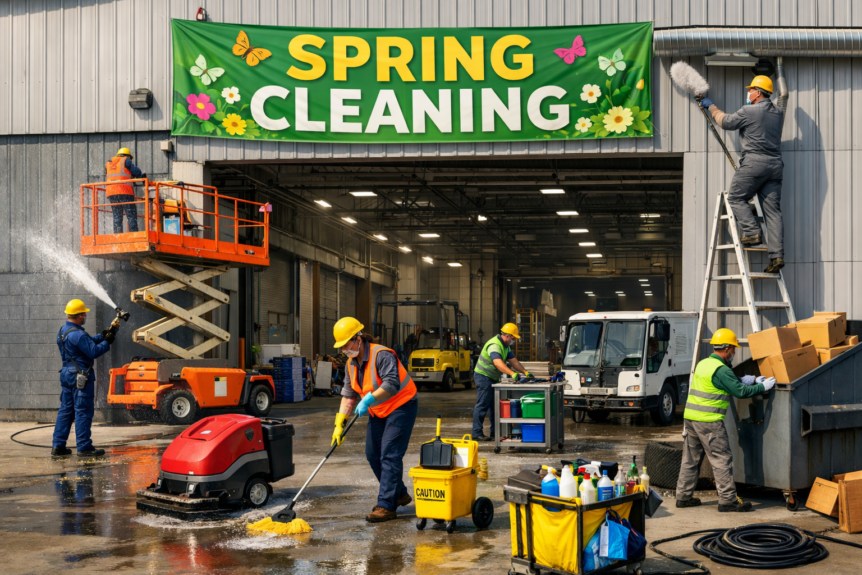
Spring has arrived. The birds are chirping, the days are longer, and somewhere in the depths of your industrial building, a pallet jack from 2009 is still blocking an electrical panel. While spring cleaning usually conjures images of residential garages and overflowing closets, industrial and commercial properties need a seasonal refresh too, maybe even more so.
Think of spring cleaning as preventive maintenance with a sense of humor. It’s not just about tidying up; it’s about safety, efficiency, and making sure your building isn’t silently judging you every time you walk through the loading door.
So grab your clipboard (or tablet, we’re modern professionals here), and let’s talk about spring cleaning for industrial properties, without putting anyone to sleep.
Don’t forget to download Johnston Pacific’s handy Vendor guide to get all the help you need for this undertaking. (QR CODE)
Step 1: Declutter Like You Mean It (Yes, That Includes “Someday” Items)
Every industrial building has that corner. You know the one. It’s where obsolete equipment, mystery crates, and broken shelving go to retire. No one remembers who owns it, what it’s for, or why it’s still there, but everyone agrees it might be useful someday.
Spring cleaning is the perfect time to ask the tough questions:
- Has this machine been used in the last five years?
- Does anyone actually know how to operate it?
- Is “vintage” a valid excuse for keeping it?
Clearing out unused inventory and equipment does more than improve appearances, it frees up valuable square footage, improves workflow, and reduces safety hazards. Plus, it makes your building feel bigger without paying for an expansion. That’s what we call industrial magic.
Step 2: Floors, Walls, and Ceilings, Yes, All of Them
Industrial floors are tough, but they’re not invincible. Over time, oil stains, tire marks, and years of “we’ll clean it later” add up. Spring is the time to pressure wash, reseal, and repair cracks before they become trip hazards, or worse, tenant complaints.
Walls and ceilings deserve some love too. Dust buildup, cobwebs, and mysterious stains don’t exactly scream “well-managed property.” A deep clean improves lighting efficiency, air quality, and overall morale. Because let’s face it, people work better when they don’t feel like they’re inside a forgotten storage unit.
Step 3: Loading Docks, The Unsung Heroes of Your Property
Loading docks or doors take a beating year-round. Forklifts, trucks, pallets, and the occasional “oops” moment all leave their mark. Spring cleaning is the ideal time to inspect, roll up doors, dock levelers, bumpers, seals, and lighting.
A clean, well-maintained loading area isn’t just safer, it sends a message. To tenants, vendors, and drivers, it says: This operation is buttoned up. And in industrial real estate, that impression matters more than you think.
Bonus tip: repainting stripes and safety markings is a small investment with big visual impact. It’s like eyeliner for your warehouse, subtle, but effective.
Step 4: HVAC and Ventilation, Out of Sight, Not Out of Mind
If your HVAC system could talk, it would probably ask for a break. Filters clogged with dust, vents working overtime, and systems struggling to keep up are common issues in industrial buildings.
Spring is the perfect time for inspections, filter replacements, and maintenance checks. Clean systems improve air quality, reduce energy costs, and extend equipment life. They also prevent that awkward moment when a tenant asks why their warehouse smells like last summer.
Fresh air isn’t just for office buildings. Your industrial space deserves it too.
Step 5: Electrical Rooms and Panels, No More “Temporary” Storage
Somewhere along the way, electrical rooms tend to become unofficial storage closets. Boxes, tools, spare parts, stacked dangerously close to panels clearly labeled KEEP CLEAR.
Spring cleaning is your reminder that electrical rooms are not storage units. Clearing these areas improves safety, code compliance, and accessibility for maintenance. It also reduces fire risk, which is always a crowd favorite when talking about liability.
Think of it this way: if an electrician can’t access the panel without playing Tetris, it’s time to clean up.
Step 6: Exterior Areas, Because Curb Appeal Isn’t Just for Retail
Industrial properties don’t need fountains or flower arches, but that doesn’t mean exteriors should be ignored. Spring cleaning is a great time to:
- Power wash building facades
- Clear weeds and debris
- Touch up paint
- Repair fencing and gates
- Organize outdoor storage areas
A clean exterior improves first impressions for tenants, investors, and buyers. It also signals pride of ownership, which often translates to higher retention and stronger property value.
Even warehouses like to look sharp.
Step 7: Paperwork Counts as Cleaning Too
Spring cleaning isn’t just physical, it’s operational. Reviewing leases, maintenance records, warranties, and compliance documentation is part of keeping industrial property running smoothly.
Outdated records and expired inspections can create headaches later. A little organizational effort now can save a lot of scrambling down the road. Plus, nothing feels better than a clean file system, except maybe a clean loading dock.
The Bottom Line
Spring cleaning for industrial properties isn’t glamorous, but it’s incredibly effective. It improves safety, efficiency, tenant satisfaction, and long-term value. It also helps uncover issues early, before they become expensive problems with extra zeros attached.
And yes, it may require dumpsters, pressure washers, and a few honest conversations about whether that broken conveyor belt is ever coming back to life. But when the dust settles (literally), you’ll have a cleaner, safer, more functional property that’s ready for the busy seasons ahead.
Because spring cleaning isn’t about perfection, it’s about progress. And your industrial building will thank you for it… silently, of course.